



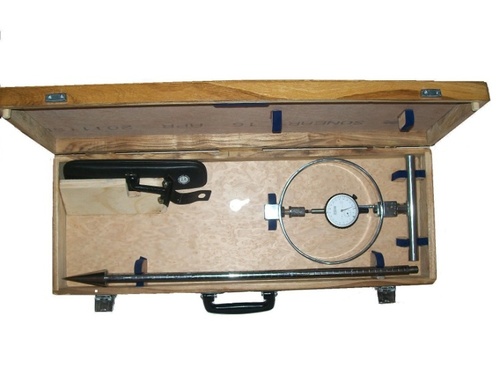
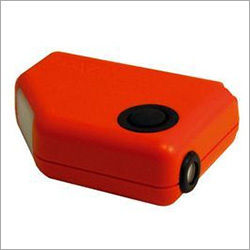
Cone Penetrometer
Product Details:
- Temperature 10C to 50C
- Resolution 1 unit
- Automation Grade Manual
- Test Range 0-80 mm (Penetration depth)
- Features Removable cone, Adjustable height, Sturdy construction
- Application Determining consistency of lubricating greases and other semi-solid materials
- Display Type Analog/Dial Indicator
- Click to View more
X
Cone Penetrometer Price And Quantity
Cone Penetrometer Product Specifications
- Manual
- 10C to 50C
- 1 unit
- Standard penetration rate 20 mm/s
- 1 at a time
- 85% RH
- Laboratory
- Analog/Dial Indicator
- Determining consistency of lubricating greases and other semi-solid materials
- 0-80 mm (Penetration depth)
- Removable cone, Adjustable height, Sturdy construction
- 0-400 penetration units
- Cone Penetrometer
- Standard laboratory sample cup
- Manual
- Approx. 10-15 kg
- 230 V, 50 Hz, AC
- Manual
- 230 V AC
- 0-100 mm
- 50 Hz
- Standard sample cup opening
- Approx. 500 mm
- 1 unit
- Immediate (Manual)
- Up to 100g sample
- Standard (as per laboratory bench)
- Bench-top
- 30 or 90 (As per test requirement)
- Stainless Steel & Mild Steel
- Powder Coated/Painted
- Standard weights, Sample containers
- IS 1448, ASTM D217, IP 50 Standards
- 100g/150g (As per standard)
Cone Penetrometer Trade Information
- Yes
- Sample costs shipping and taxes has to be paid by the buyer
- Australia, North America, Eastern Europe, Middle East, Africa, Western Europe, Central America, South America, Asia
- All India
- ISO Certification, MSME Certificate
Product Description
Kaizen Imperial is manufacturing best quality Cone Penetrometer which is a instrument used for measuring static penetration resistance. The process includes pushing of the cone with a tip facing downwards into the ground along with a controlled rate. The encountered resistance is measured on the fitted load ring. The said Cone Penetrometer is durable, reliable, robust in nature as well as provides high efficient service.
Penetrometer, Proving Ring Type. (Vicksberg Penetrometer)
Simple and light instrument for measuring static penetration resistance. The thrust force is provided directly by the operator who, by pushing on the T handle, forces the cone into the soil. The encountered resistance is measured on the fitted load ring. Testing is only possible in soils with good consistency and for short depths.
Specifications:-
- 1 Cones with 30o cone angle
- 2 KN (200 kg f) load ring
- Road length 45 cm.
Precision Instrumentation for Grease Analysis
Designed to meet the rigorous requirements of laboratories, the Cone Penetrometer provides accurate measurement of grease penetration. Its sturdy stainless steel and mild steel construction ensures long-term reliability, while powder coating or painting protects the device from corrosive substances often encountered during testing. With a measuring range of 0-400 penetration units, immediate analog/dial response, and compliance with major standards, it enables consistent, repeatable results for every test.
Flexible Testing Options for Varied Applications
The penetrometer offers interchangeable cones of different weights and angles to suit a wide variety of sample types and test protocols. Adjustable height, manual control, and the bench-top design make it easy to adapt for specific laboratory set-ups or test requirements. Supporting a single specimen at a time in a standard cup, it delivers a test stroke of 0-100mm and accurate results across a humidity range up to 85% RH and temperatures from 10C to 50C.
Comprehensive Accessories for Efficient Testing
Supplied with standard weights and sample containers, the Cone Penetrometer package ensures users have everything needed to start testing immediately. Its simple manual interface and removable cone make operation straightforward, while the analog indicator provides immediate feedback, helping laboratory personnel achieve fast, dependable results for grease and semi-solid material analysis.
FAQs of Cone Penetrometer:
Q: How does the Cone Penetrometer determine the consistency of lubricating greases?
A: The Cone Penetrometer measures the depth a standardized cone penetrates into a sample under controlled conditions. This penetration depth, recorded in units, reflects the samples consistency, helping assess its suitability for specific applications.Q: What materials are used in the construction of the Cone Penetrometer?
A: This equipment is fabricated using stainless steel and mild steel, providing durability and resistance to corrosion for repeated laboratory use. It is protected by a powder-coated or painted finish to further enhance its longevity.Q: When should I select the 30 or 90 cone angle for testing?
A: The choice between 30 and 90 cone angles depends on the standard test method or material being analyzed. Always refer to IS 1448, ASTM D217, or IP 50 standards and your specific laboratory requirements for optimal cone selection.Q: Where can the Cone Penetrometer be used effectively?
A: The Cone Penetrometer is designed for laboratory environments. Its bench-top mounting and robust construction make it suitable for routine testing in industries handling lubricating greases, including research and quality control labs.Q: What accessories are included with the Cone Penetrometer?
A: The system comes with standard weights and sample containers, ensuring convenient sample handling and precise weight adjustments during penetration tests.Q: How is the penetration measurement process conducted?
A: First, a prepared specimen is placed in the sample container. The height and cone angle/weight are set according to the test protocol. The cone is manually released, and its penetration depth is read on the analog/dial display, giving an immediate measurement.Q: What are the key benefits of using this penetrometer in laboratory testing?
A: Key advantages include compliance with international standards, high accuracy (1 unit), manual operation for control, fast response, and adaptability through removable cones and adjustable setup. These features ensure reliable and repeatable consistency measurements for semi-solid samples.Tell us about your requirement

Price:
Quantity
Select Unit
- 50
- 100
- 200
- 250
- 500
- 1000+
Additional detail
Mobile number
Email

Other Products in 'Soil Testing Instruments' category

Contact Details
- India Address: B-1/6128, Dev Nagar, Karol Bagh,New Delhi - 110005, India
- Phone : 08045802393
- Russia Address:
Prospekt Lunacharskogo 11-3-17
Saint-Petersburg 194354 Russia
- Mr. Tarun Tirath (Mr)
- Mobile : 08045802393
- info@kaizenimperial.in
 Send Inquiry
 Send Inquiry
 Send SMS
 Call Me Free
-

-

Follow Us on 


 |
KAIZEN IMPERIAL
All Rights Reserved.(Terms of Use) Developed and Managed by Infocom Network Private Limited. |
